A Formation Graphic Is Not a Freeze-Frame
See how a football formation changes by phase, so you can read team shape beyond the lineup graphic and spot the roles that shift as play unfolds.
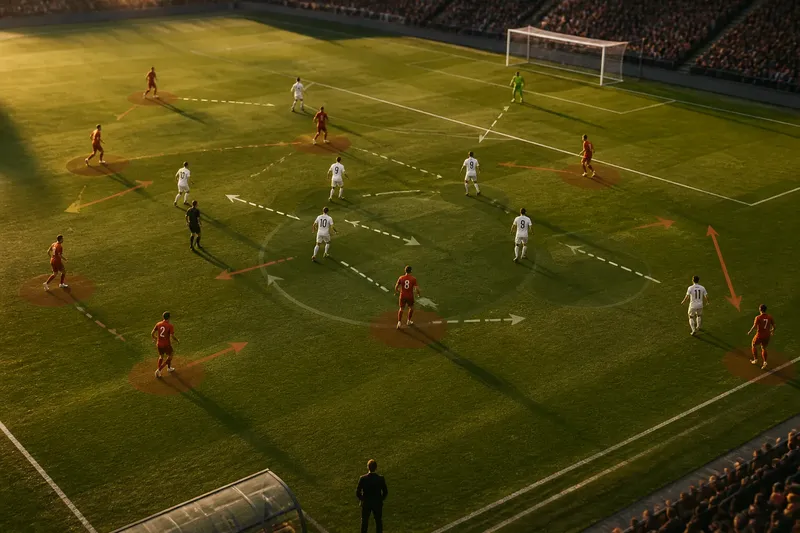
The most common mistake in reading a football formation is treating the lineup graphic as a photograph of the team’s shape. That shortcut can hide who is stepping forward, who is covering space, and why the same players appear in different arrangements a few seconds later.
A formation graphic is a useful starting point, not a map of every phase. To read team shape, follow the team as it builds an attack, settles into possession, defends, and responds when the ball changes hands.
Why formations shift
A formation names a broad arrangement of players, often shown at kickoff or in a team sheet. It does not tell you how those players behave in every situation. A fullback may begin in the back line, move higher when the team has the ball, then drop beside the center backs when the opponent attacks.
That movement is not necessarily a change of formation in the dramatic sense. It is often a planned adjustment to the problem in front of the team: creating a passing option, protecting a vulnerable area, or giving a teammate room to move.
For a clear read, anchor your attention to the ball and the team’s current task. Ask whether the side is building, attacking, defending, or reorganizing. Then notice which players move, which hold their positions, and what space the arrangement seems designed to protect or reach.
1. Build-up shape
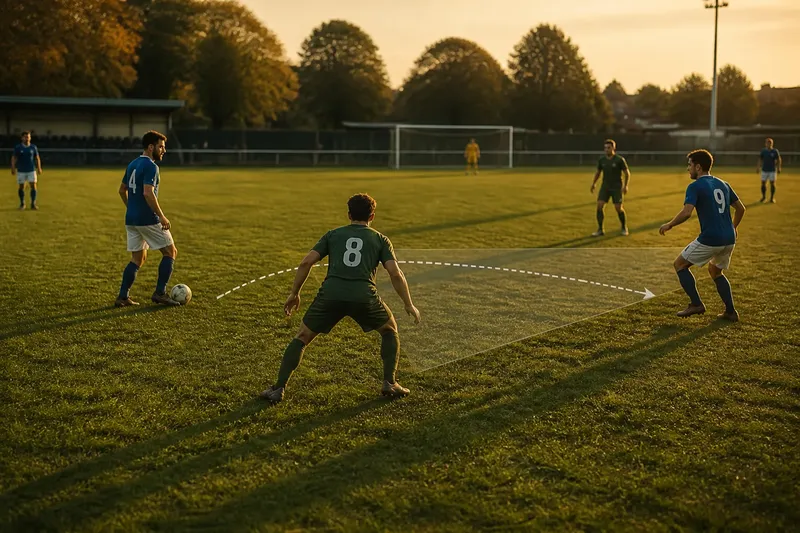
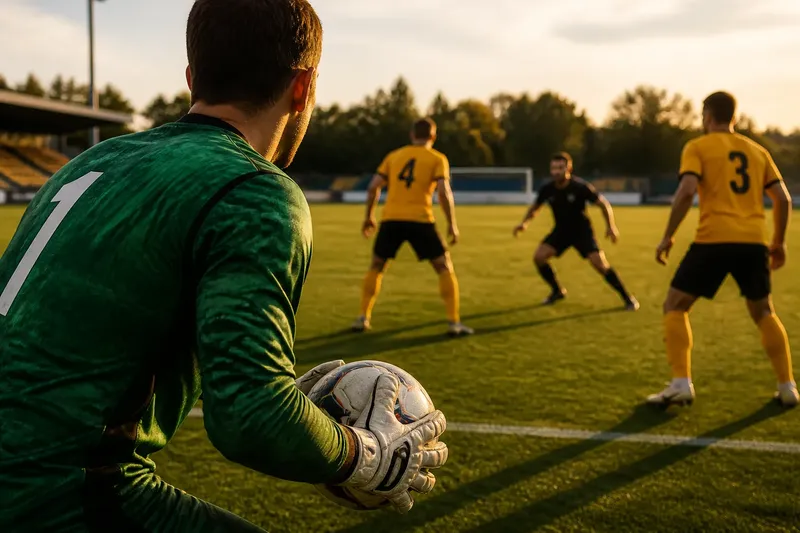
When a team starts an attack from its goalkeeper or defenders, its shape often changes to make the first passes easier. A midfielder may drop toward the center backs, while one or both fullbacks push up. The aim is to give the player on the ball more than one useful route forward.
Watch the distances between the goalkeeper, defenders, and midfielders. If a player drops too close to a teammate, the opposition may be able to cover both with one defender. If the supporting player moves into a different lane, the ball carrier may have a clearer option without anyone needing to sprint into open space.
The important detail is the job being done, not the label attached to the lineup. A side listed in a familiar formation may use a very different-looking back line during its first pass out, then shift again once the ball reaches midfield.
2. Attacking shape
Once the team has carried or passed the ball forward, players may spread across the pitch to stretch the defense. Wingers can hold wide positions, a striker can occupy the center backs, and midfielders can arrive between the lines. The team’s original arrangement has become a set of attacking relationships.
Those relationships matter more than a neat row of shirt numbers. A player who starts as a central midfielder may move toward the edge of the penalty area, while a fullback stays deeper to provide cover. The shape is changing because the team is asking different players to occupy different spaces.
Look for the player who stays available behind the attack, not only the runners nearest goal. That supporting presence can help the side retain possession and can also limit how exposed it is if a pass is intercepted.
3. Defensive block
When the opponent has settled possession, the defending team usually contracts toward the spaces it wants to deny. Wide players may drop closer to their midfielders, and the forward line may position itself to make the central route less inviting. The result can look nothing like the team’s attacking arrangement.
Notice how the lines move together. If a midfielder drops but the defenders stay deep, a gap can open between them. If the back line steps forward while the midfield remains far away, an opponent may find room between the lines. Shape is not simply where players stand; it is also how their distances change as the ball moves.
Imagine a team listed with four defenders, three midfielders, and three forwards. When the opponent circulates the ball across its back line, one forward might drop alongside the midfielders while the wide attackers narrow. The expected observable result is a more compact central block, even though no player has been substituted and the team sheet has not changed.
4. Pressing shape
A team that presses high may use a shape built to steer the opponent toward a chosen area. One forward can close the center back while a teammate angles a run to make a pass toward the opposite side less attractive. A midfielder may move up behind them to challenge the next receiver.
From the stands or a broadcast view, track the players who are not nearest the ball. Their positions reveal whether the press is connected or whether the first runner is isolated. A forward sprinting alone can look energetic, but the team’s shape only supports that action if teammates are ready to cover likely passes and follow the play.
This is a distinct phase from the settled defensive block. The team may start high, then retreat if the opponent gets past the first line. The formation graphic cannot show that decision; the movement of the whole unit can.
5. Transition shape
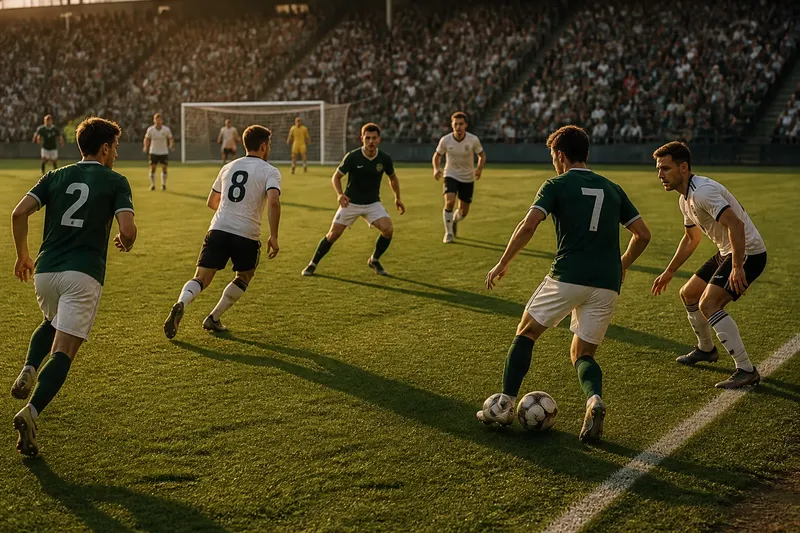
After possession changes, players rarely have time to arrange themselves into a tidy formation before making a decision. Some sprint toward the ball, others recover toward their own goal, and a nearby teammate may offer an immediate passing outlet. The team’s temporary shape reflects urgency as much as its original plan.
When a side wins the ball, look for the first player who makes the field larger by moving away from the crowd. That run may give the ball carrier a forward option. When a side loses it, check whether nearby players close the ball while deeper teammates protect the route toward goal.
The transition can settle into another phase within moments. A team that initially breaks forward may slow down and rebuild, while a team that starts pressing after a loss may fall into a compact block once the opponent escapes. Read the sequence rather than assigning one shape to the entire passage.
6. Roles behind the picture
Formation names are shorthand, but roles explain the choices that make a shape work. A player may be asked to hold a wide lane, provide cover behind an advancing teammate, connect defense to midfield, or occupy space near the striker. The same player can take on different jobs as the ball moves.
That flexibility does not mean every position is interchangeable. A player’s starting location, teammates’ movements, and the opponent’s choices all affect what is practical. A central defender stepping into midfield, for example, changes who protects the space behind; someone else may need to adjust rather than leaving that area unattended.
For a useful viewing habit, follow one player through a full possession and then through the opponent’s next attack. Note where that player starts, where they move when their team has the ball, and how they respond when the ball is lost. The pattern often reveals more than the formation label.
What should you watch?
Does the shape change with possession?
Compare the team’s arrangement when it has the ball with its spacing when the opponent controls it. A player who advances in possession may recover into a deeper role without changing the team’s basic personnel.
Who gives the ball carrier an option?
Look for support at different distances and angles, not just the closest teammate. A useful shape gives the player on the ball a choice while keeping other players ready for the next action.
Which spaces are being protected?
Watch the areas between the defensive and midfield lines, as well as the space behind advancing players. The team’s positioning often makes most sense once you identify the space it is trying to keep open or deny.
When does the team reset?
Notice whether players keep pressing after the first line is beaten or retreat into a more compact arrangement. That moment shows how one phase ends and another begins.
Read the moving picture
The formation graphic remains useful for recognizing a team’s starting structure, but it is only one frame in a longer sequence. Build-up, attack, defending, pressing, and transitions each ask players to occupy different spaces and support different decisions.
Next time a formation appears on screen, treat it as a question rather than an answer. Follow the ball, choose one player to track, and watch how teammates respond; the shape becomes clearer as a set of movements, not a frozen diagram.