The Passing Lane Is a Defensive Tool, Too
Learn how to block a forward passing lane in football, steer possession sideways and help teammates respond without rushing into a tackle.
The common mistake when defending a passing lane is chasing the ball carrier while a forward option stays open. That can leave the next defender facing a receiver who has time to turn. Angle your approach to screen the pass and invite a less dangerous route instead.
A passing lane is the path a pass could take between the ball carrier and a teammate. Your position can make that route difficult to see or play while leaving another option available. The aim is not to predict every pass; it is to shape the next decision and stay ready to adjust.
Screen the central route
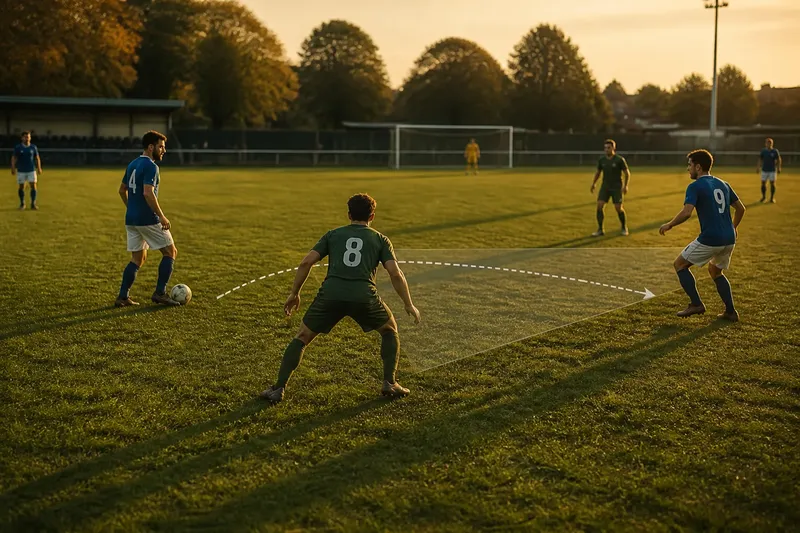
Imagine the opposing center back has the ball and a striker is checking toward midfield. As the nearest midfielder, you need to relate your position to both players. Stand directly in the passing line and you may block it, but you could also be poorly placed to react if the carrier moves the ball sideways or the striker runs behind.
Approach on a curve so your body sits between the ball and striker while the carrier can still see a route toward a fullback. This position is often called a cover shadow: the area behind you that your body screens from the ball. Keep a half-turned stance, with the ball and receiver in view, and shorten your steps as you close in.
Watch the carrier’s touch and the receiver’s movement. If the striker drifts away from the lane, adjust rather than holding a screen that no longer matters. If the carrier takes a loose touch, you may have a chance to challenge—but only if you can do so without opening the route you were assigned to protect.
Match the angle to play
Receiver behind your line
Prioritize the pass if a striker is positioned to receive and turn toward your defense. Stay between the ball and receiver, then step closer to the carrier only if a teammate can cover the space you leave. If the receiver moves away from danger, shift your attention to the new forward option.
Carrier with time
Use a measured approach and keep the central route screened. A full-speed sprint can let the carrier play around you before you can change direction. If a teammate is not ready to press the next receiver, hold your position rather than showing a route the team cannot cover.
Carrier under pressure
If a teammate is close enough to pressure the ball, your job may be to screen the forward outlet. Move in relation to that presser so the carrier has fewer clear choices. If the first presser is too far away to affect the carrier, do not abandon your zone just to imitate a press.
Ball near the touchline
The sideline removes one direction of play, so angle your run to make an inside pass harder to complete. Before stepping toward the ball, check whether an opponent can run behind you or receive from an overlapping teammate. If your team has cover on that side, you can help direct play toward the boundary; if it does not, stay balanced enough to protect the open route.
What should you watch?
How can you tell a lane is screened?
Look from the ball carrier’s position: could a forward pass travel cleanly beside you? If your body or a teammate blocks the direct route, the lane is screened; if the carrier has a clear channel around you, adjust your angle or ask a teammate to take that route.
Should you watch the ball or runner?
Use a half-turned stance that keeps both in view, and keep checking as the ball moves. If the receiver slips behind your shoulder, turn and recover; if the carrier shifts the ball, adjust your approach without losing track of the runner.
When should you leave the lane?
Move away when a teammate has taken responsibility for the screen, the receiver has left the dangerous area, or the carrier’s touch gives you a sound chance to challenge. Call the handoff or signal it clearly; if nobody has taken over, remain in position rather than exposing the route.
What if the opponent passes sideways?
A sideways pass may be the route you were trying to encourage. Shift with the ball and rebuild the screen against the new carrier. If your team cannot move across together, hold a position that protects the most dangerous forward route instead of chasing the ball alone.
Read the cover behind
Your angle should fit the teammates behind and beside you. If you screen a pass into a striker, a center back needs to be positioned to respond if that pass gets through. If the back line is retreating, avoid stepping so far forward that a pass over the top becomes the easiest option.
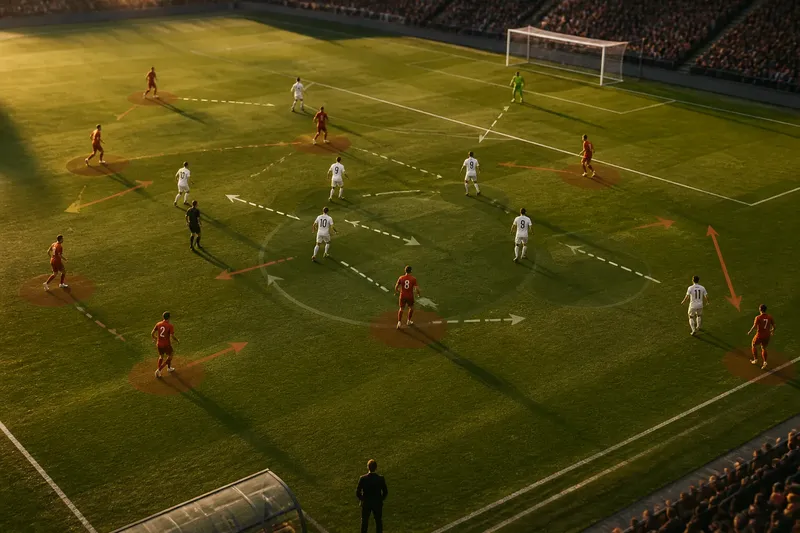
Say your team’s left midfielder closes an opposing center back while the left winger prepares to press the fullback. The midfielder curves the run to hide the central pass and show the ball toward the touchline; as the pass travels, the winger closes the fullback. If the winger arrives in time and the midfielder keeps the central route screened, the receiver may have fewer forward options. If the winger is late, the midfielder should recover toward the center rather than assume the wide player is trapped.
Common angle errors
Running straight at the carrier can leave the central receiver visible around your shoulder. Curve your approach so your body crosses that route, then keep your feet active enough to respond if the carrier changes direction.
Another error is focusing on the receiver while losing touch with the ball. The carrier may switch to a different forward option while you are too far away to influence the next pass. Keep checking the ball, the receiver, and the cover behind you as the play develops.
Do not confuse steering with refusing to press. If the carrier takes a loose touch or receives facing away from play, you may be able to challenge. If that would expose a more dangerous route, hold the screen and let a teammate close the ball.
Make the screen useful
A passing lane is a defensive tool because it lets you influence the opponent before the ball reaches a dangerous receiver. Choose the route that matters most, approach at an angle that leaves a manageable option visible, and coordinate with the teammate responsible for that option. When the ball goes sideways, move with it and reset your position.
For a useful match-reading cue, watch the defender’s body angle and the receiver together. If the run keeps the receiver behind the defender while leaving the carrier a sideways pass, the defender is shaping the choice rather than simply chasing. The next question is whether teammates are close enough to respond to that choice.