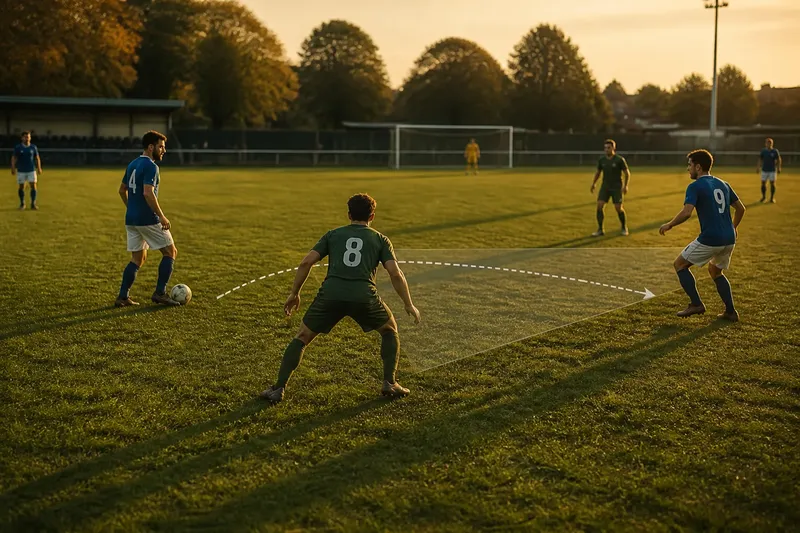
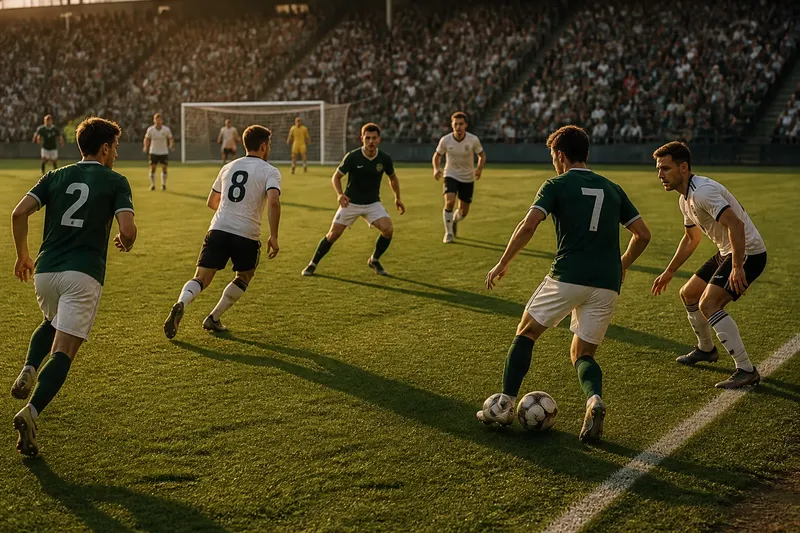
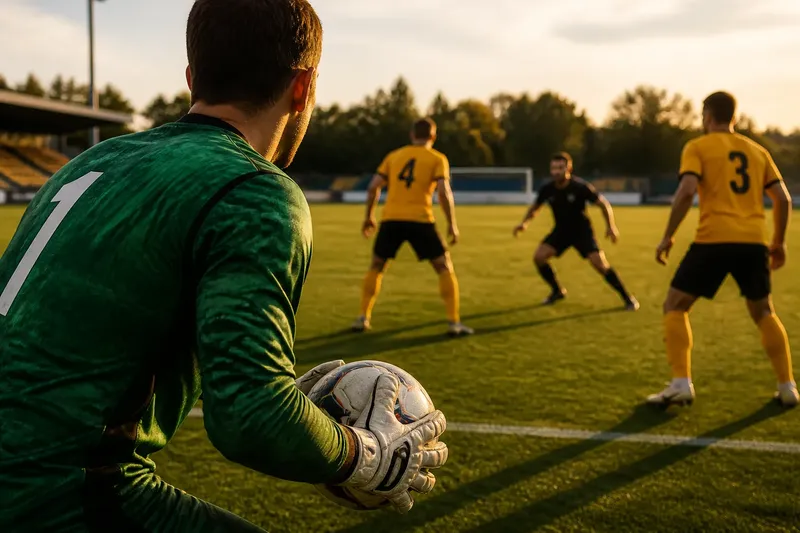
Watch the Five Seconds After a Turnover
Watch the five seconds after a turnover to read both teams’ first reactions, spot changing roles and understand a transition without judging its outcome.
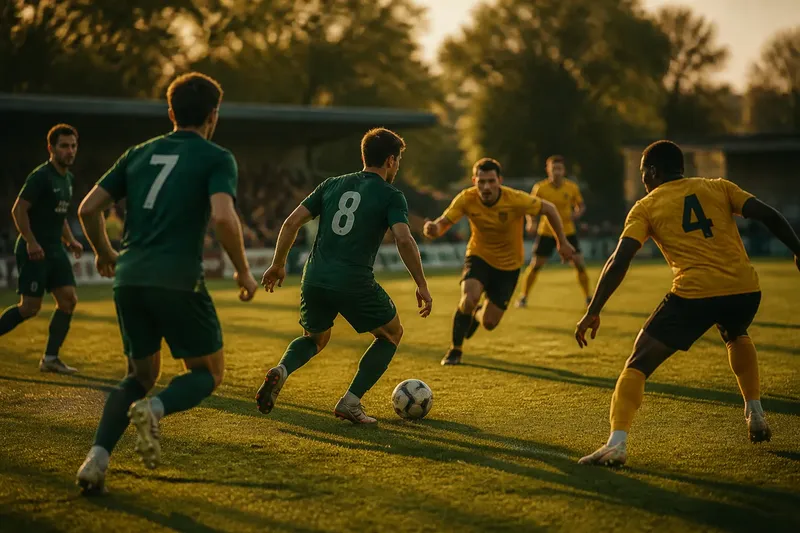
The common mistake when watching a turnover is to judge it by the next pass: a counterattack succeeds, or the ball is lost again, so the transition gets filed as good or bad. Watch the five seconds after a turnover instead, and you can see the decisions that shaped the move before its outcome took over the story.
Use the exercise whenever possession changes, whether from a tackle, interception, loose touch, save or restart. Keep your attention on both teams: the new possessor’s first choices and the opponents’ first response. You are not grading the attack. You are tracking how quickly each side recognizes that the game has changed.
What counts as a turnover?
A turnover is a change in which team controls the ball during open play. The moment can be obvious, as when a defender cleanly intercepts a pass, or messy, as when two players contest a loose ball and one side emerges able to act.
For this exercise, start the clock when one team has a clear next action and the other no longer has control. A deflection alone may not be enough; a loose ball that either side can reach is still contested. If the ball goes out or play stops, mark the sequence as interrupted rather than treating the restart as part of the same transition.
That small distinction keeps the exercise useful. It prevents you from crediting a team with a reaction before possession is actually settled, and it gives you a consistent starting point when the change happens in a crowded area.
Why watch five seconds?
Five seconds is a viewing window, not a rule of football. It is long enough to catch an initial decision, a supporting movement and an opponent’s response, while short enough to stop the eventual shot or turnover from coloring what you noticed first.
Some sequences resolve almost immediately. A player may have a forward pass available, the opponent may close it, and the ball may change hands again before the window ends. Others are still unfolding at the end. Either way, the question is what each team tried to do during that short stretch, not whether the whole attack lasted longer.
Use the same count on the ball and off it. Let your eyes move from the new possessor to nearby teammates, then to the opponents nearest the play and the players behind them. A replay or broadcast pause can help you separate those reactions, but ordinary live viewing is enough to begin.
How do you mark the moment?
Start at the first clear control, then count quietly: one, two, three, four, five. You can do this in your head while watching a match, or jot a few words in a notebook after the sequence. Don’t rewind to search for the perfect frame; choose the first moment at which one team can make a deliberate play.
Record only what you can see. Useful shorthand might be “first touch forward, nearest defender closes, winger tracks back, center back steps up.” Avoid labels like “lazy,” “brilliant” or “wrong” during the count. They turn an observation into a verdict before you have noticed what options and pressure were present.
If you lose sight of the ball, follow the nearest players first. Their movement often reveals whether the team in possession is trying to break forward, keep the ball or settle into a safer shape, while the other side may be trying to delay the attack or recover behind it.
What does the new possessor do?
Watch the first player on the ball, then the nearest available teammates. Does the player turn toward goal, play a forward pass, protect the ball, or choose a reset? Does a teammate sprint into space, come short to offer support, or stay wide to stretch the defense?
These are clues about the team’s immediate priorities, not a complete verdict on its tactics. A forward run may offer an outlet even if the passer keeps the ball. A short option may help the player escape pressure, while a backward pass can give teammates time to move into useful positions.
Notice whether the first action changes after the opponent reacts. A player may initially face forward, then shield the ball when a defender arrives. That adjustment matters: the turnover did not produce a fixed script; the available space and pressure shaped the next choice.
How does the other team react?
Look for the nearest opponent’s first movement. They may press the ball, block a nearby passing route, recover toward their own goal or pause to protect the space behind them. Then scan one layer farther back: do teammates join the pressure, cover an exposed area or retreat together?
Don’t assume that every player should chase the ball. One opponent’s pressure can make sense because another teammate is positioned to cover a passing option. A defender who drops while a teammate closes the ball may be protecting against a forward run rather than refusing to engage.
Track the team’s shape as it responds. Does the nearest pressure arrive alone, or do supporting players move with it? Does the back line step forward, hold its ground or retreat? These visible choices help explain which spaces each side is trying to protect or reach during the transition.
What should you look for first?
Follow a simple viewing order: the ball, the nearest support, the nearest pressure, then the players who could connect or cover beyond them. This keeps your attention moving through the transition without asking you to watch every player at once.
- Control: Who has the first clear touch, and can that player act freely?
- Direction: Does the first action face forward, sideways or back toward support?
- Options: Who offers a pass, a run or a nearby outlet?
- Pressure: Who closes the ball, and who covers the next likely option?
- Space: Which open area does either team appear to attack or defend?
- Recovery: Which players move toward their own goal, and which stay ready to press?
These are prompts, not boxes a team must tick. If the ball is trapped against the touchline, direction and nearby support may matter most. If possession changes in open space, the opposing back line and runners beyond the ball may be easier to read.
What if the transition looks messy?
Messiness is still information. A loose touch may delay the new possessor, leaving teammates unsure whether to run forward or come close. The other side may hesitate between pressing and recovering. Describe those visible actions without deciding that either team planned the confusion.
Say you are watching a hypothetical sequence in which a midfielder intercepts a pass near the center circle. The midfielder’s first touch points toward the sideline; a teammate runs ahead, an opponent closes from the side, and another defender drops toward the penalty area. In the next few seconds, you can observe whether the midfielder finds the runner, shields the ball or turns back—and whether the opponent’s pressure brings support. Whatever happens next, the first reactions are already readable.
If the same player wins the ball again immediately, treat that as a second change of possession and begin a new count. Keeping the sequences separate makes it easier to notice whether a team can respond to a second transition, rather than blending two different moments into one impression.
How can you use the notes?
After a short stretch of play, review what you wrote and look for repeated choices. Perhaps a team often sends a nearby player toward the ball while another makes a forward run, or its opponents tend to recover before attempting pressure. Phrase the pattern narrowly: “In these moments, the nearest player usually closes the ball,” not “They always press.”
Compare different kinds of turnovers without assuming they are equivalent. An interception in open space offers different immediate options from a recovery near the touchline or a loose ball close to a crowded penalty area. The point is to notice how location and nearby players change the first response.
If you have access to a broadcast replay, use it to check one specific observation—for example, whether a teammate offered a forward option while the ball carrier was under pressure. A replay can reveal a player outside the live camera’s attention, but it may also omit the wider context. Keep your original note and add what the replay clarified rather than replacing observation with hindsight.
What questions help you read it?
Should I start at the tackle or the next touch?
Start when one side clearly controls the ball, not automatically at the tackle. A tackle can leave possession loose, and the next touch may still be contested; waiting for clear control gives your five-second window a more consistent beginning.
Do I watch the ball or the players?
Begin with the ball so you can identify the new possessor and first action. Then shift to nearby players on both teams, since support runs, pressure and recovery often explain why the ball carrier chooses one option over another.
Does a backward pass mean the counterattack failed?
No. It describes the direction of one action, not the quality of the transition. A backward pass may help a team keep possession or give teammates room to move; assess it alongside the pressure, support and space visible at the time.
What if nothing happens in five seconds?
Record the lack of an obvious forward action as an observation, not a failure. The new possessor may be protecting the ball, waiting for support or facing pressure that closes the available routes; watch the opponents’ positioning to understand the pause.
When should you stop judging?
Keep the outcome outside the initial observation. A shot can miss after a clever first pass, and a promising run can end with a defender’s recovery. Neither result changes what the teams did immediately after possession changed.
Once the five seconds are over, you can decide whether to follow the attack or return to the wider match. The useful habit is to make that choice after recording the early reactions. When you watch the five seconds after a turnover, you get a clearer view of how both teams respond before the result tempts you to rewrite the moment.